Payment bonds keep the money flowing on construction projects when a contractor fails to pay subcontractors or suppliers. They are often required by owners and lenders on public and larger private jobs. Yet many claimants discover the hard way that a payment bond is not a blank check. Tight definitions, statutory limits, and endorsements carve out whole categories of costs. Understanding what sits outside the fence will save you months of claim frustration and thousands in legal fees.
What follows draws on the day‑to‑day realities of enforcing and underwriting these bonds. I have watched suppliers get stiffed on sales tax because they assumed “payment” meant every dollar on their invoice. I have seen subcontractors prevail on principal amounts but lose six figures of extended overhead when a project stalled. These exclusions are not theoretical. They are the difference between a bond that saves your business and one that barely covers your material at cost.
What a payment bond is meant to cover
A payment bond guarantees payment for labor and material follow this link furnished to a bonded project, usually to the extent required by statute or contract. On federal work in the United States, the Miller Act governs. Each state has a “Little Miller Act” for state and municipal jobs with its own twists. Private projects depend on the bond form and prime contract.
In the ordinary case, a qualified claimant can recover the unpaid contract balance for labor and material supplied to the project, possibly with interest and fees if allowed by the bond or statute. The bond is not liability insurance, not a performance bond, and not a warranty of the contractor’s business. That frame explains most exclusions: if a cost feels ancillary to actual labor and material physically incorporated into the work, the surety probably pushed it to the sideline.
Who is not a covered claimant
Exclusions often start with who may claim. On a layered supply chain, eligibility cuts off at a specific tier.
- Typical public project structure in the U.S. allows direct claims by first‑tier subcontractors and suppliers to the prime. Second‑tier subs and suppliers to first‑tier subs can usually claim as well, though the notice burden is heavier. Third‑tier claimants are commonly excluded, with few exceptions. If you sell to a distributor who sells to a sub, who feeds a prime, your bond path may end at the loading dock. On private projects, many bond forms limit claimants to those direct to the contractor. I have seen owner‑drafted forms that define “Claimant” narrowly to shut out anyone without a contract directly with the principal. That single definition can erase rights for a second‑tier supplier who furnished 40 truckloads of rebar.
The gray area sits around consultants, design partners, and temporary staffing firms. Pure design services, like schematic design or architectural review not tied to furnished materials, are generally excluded unless the bond expressly includes professional services. A geotechnical firm that only does testing and reporting, with no physical product, may be out. A surveying outfit that sets control lines before concrete work starts, and bills time and materials, might be in or out depending on jurisdiction and the bond’s wording. When in doubt, get the bond form early and read the definition of “labor and material” and “Claimant,” then map your place in the contracting food chain.
Costs for off‑project supplies and equipment
Another boundary line is physical incorporation into the project. The closer your goods come to living in the finished work, the stronger your claim. The farther away, the weaker.
Rental equipment and small tools are a recurring flashpoint. If you rent a bulldozer for Site A, then shuffle it to Site B for a week, most sureties will contest the portion of rent not attributable to the bonded project. Some bond forms pay for “equipment rented and used on the Project,” but they often exclude idle time, mobilization, and demobilization unless the contract expressly pays for them. If your crew keeps a lift on standby due to an owner‑caused delay, the owner may owe you under your subcontract, yet the surety can deny that standby rent as outside the bond’s intent.
Consumables such as fuel, form oil, abrasive blades, and welding gas sit on a spectrum. Certain states allow recovery for consumables needed to perform the labor. Others require that the item be incorporated into the project, which knocks out fuel and some wear parts. In practice, I have had more success when invoices break down quantities tied to specific field tickets or daily reports on the bonded job. Vague “shop supplies” lines never help.
Prefabrication can also surprise claimants. Materials prefabricated offsite that are specially fabricated for the project usually qualify, even before delivery, once fabrication begins and the goods are not readily resalable. Standard stock, even if allocated on paper to a job, typically does not. If you are a fabricator, mark your shop traveler with the job number, keep traceable heat numbers, and document the point at which items became job‑specific.
Delay damages, lost profits, and other consequential losses
Sureties underwrite payment bonds to secure payment for work performed, not to insure business risk. Most forms explicitly exclude consequential damages. That phrase catches a long list of otherwise real costs:
- Lost profits on unperformed work. If the project terminated early and you only furnished half the scope, the bond pays what you are owed for that half, not the margin you would have earned on the balance. Home office overhead on a delay claim. The Eichleay formula might get you compensated under your subcontract, but payment bonds rarely respond to these delay‑type damages. Escalation and extended general conditions due to late approvals or scope creep. Some jurisdictions allow recovery for price increases actually paid for materials incorporated into the project. A surety will still resist markup or episodic costs disconnected from discrete deliveries or labor hours. Business interruption, lost bonding capacity, and reputational harm are simply off the table.
There are edge cases. If your subcontract expressly prices stored materials on site or defines standby rates that the contractor accepted and billed to the owner, you have a path to argue that those are part of the “sum due” for labor and material. That turns on contract integration. Attach the executed change orders and pay applications that roll up those amounts rather than styling them as damages.
Sales tax, use tax, and interest
Tax and interest seem like details until they are not. A supplier in Texas once lost a five‑figure claim for unpaid sales tax because the purchase order shifted tax responsibility to the buyer, but the bond defined recoverable “sum due” by reference to the subcontract between the principal and the claimant. The surety argued that tax was not due under that subcontract since the buyer had not provided an exemption certificate, and the statute did not speak to tax. The supplier settled for principal only.
Whether tax is covered depends on three layers: the statute, the bond form, and your contract. The safest posture is to mirror the tax treatment in your invoices with the contract’s allocation of tax responsibility, and to hold exemption certificates on file. If the statute or bond allows “sums justly due,” some courts include applicable tax. Others treat it as a governmental obligation that rides outside a surety’s promise.
Interest and attorney’s fees are similarly variable. The federal Miller Act permits reasonable attorney’s fees if the underlying contract provides for them, and many state acts follow that logic. Some private bond forms forbid recovery of fees or cap interest at a statutory rate. I encourage claimants to quote the precise interest clause in their subcontract and include an interest calculation in the demand, then be prepared for the surety to cut it in negotiation.
Pay‑if‑paid and pay‑when‑paid clauses
This is the tightrope. Payment bonds guarantee payment, but most courts hold that a surety can assert the principal’s contract defenses if the bond ties the obligation to “sums justly due under the subcontract.” Pay‑if‑paid clauses condition a contractor’s duty to pay on the owner’s payment to the contractor. If enforceable in your jurisdiction, they can limit or delay what is justly due, which in turn limits the bond.
Two realities matter in the field. First, enforceability varies. Several states restrict or void pay‑if‑paid clauses on public projects as a matter of policy. Others require magic words and clear intent. Second, factual details shift outcomes. If the owner’s nonpayment stems from the contractor’s default, many courts will not allow the contractor, or its surety, to hide behind pay‑if‑paid. Document why payment stalled. If it was a contractor‑caused failing, that undercuts the defense.
Pay‑when‑paid, by contrast, is usually a timing mechanism, not a condition precedent. It defers payment for a reasonable time, then converts to a straightforward obligation. A bond will often respond once that reasonable time has passed. When presenting a claim, lay out the timeline and cite the clause to preempt the surety’s timing argument.
Warranty punch lists and defective work
Payment bonds are not a catch‑all for workmanship disputes. If the contractor withholds payment for alleged defective work or incomplete punch items, the surety will often stand down until the facts are resolved. Many bonds exclude amounts withheld for backcharges, defective work, or nonconforming materials, at least until corrected under the contract.
That said, contractors sometimes stretch defect claims to starve subs of cash. In one hospital build, a drywall sub was withheld payment for supposed finish issues on Level 5 surfaces. We pushed a partial bond demand for undisputed areas, tied to approved inspection reports and areas already accepted by the architect. The surety paid the undisputed portion and held the balance while the parties tested the finish per ASTM standards. Do not allow a global “defective work” label to swallow everything. Segregate the uncontested amounts with documentation, then pursue the delta through the contract’s dispute process.
Union benefits, fringe, and payroll burdens
Labor “cost” is larger than an hourly wage. Whether the bond covers fringe benefits, union dues, apprenticeship funds, and payroll taxes depends on jurisdictional law and the bond text. Many public works statutes expressly include fringe benefits as sums due for labor. Private bonds are more scattered. Some sureties balk at employer FICA matches or FUTA/SUTA as governmental obligations. Others routinely pay fringe contributions billed per the collective bargaining agreement.
If you are a union contractor, submit delinquency reports and trust fund contribution statements with your claim package. Cite statutory language where it exists. If you are a nonunion sub, break out payroll burdens in a way that tracks your subcontract’s schedule of values. You will have more success arguing that burdens are part of the agreed labor rate, not add‑ons.
Unapproved or extra work
Extra work without a written change order is a classic no‑man’s land. The bond covers sums due under the contract. Work performed outside the four corners of the contract, without change authorization, often dies on arrival. But field realities sometimes force work before paperwork.
The best protection is contemporaneous notice and documented direction. If the superintendent approves an RFI solution that enlarges scope, capture that in an email, a field directive, or even the daily report signed at the end of the shift. Price and submit the change within the deadline. Many bonds accept changes within the general scope of the work that are issued under the change clause. They will resist claims labeled “quantum meruit” unless your jurisdiction recognizes unjust enrichment against a surety, which most do not.
Anecdotally, I have recovered on unapproved work when three facts converged: the owner’s representative acknowledged the necessity of the work in a meeting minute, the contractor billed the owner for it in a pay application, and the subcontract’s pricing method for similar changes was clear. Absent that triangle, sureties default to “show me the change order.”
Retainage quirks and final waivers
Retainage sits at the end of the payment rainbow. Payment bonds typically cover retainage owed, but two traps exist. First, some public statutes restrict bond claims for retainage until a statutory waiting period after project acceptance. Second, final unconditional lien waivers can waive more than intended. If you sign an unconditional final waiver to receive partial payment, and it is not conditioned on the amount actually received, you may have signed away retainage and claims for extras, starving the bond claim.
Use conditional waivers tied to the dollar actually paid into your account. If a prime insists on an unconditional form, add a typed rider that carves out retainage and pending change requests by number and amount. Sureties read waivers closely. A sloppy waiver gives them a ready exclusion: “You waived it, we owe nothing.”
Notice and filing defects
Many “exclusions” are in practice missed deadlines or misaddressed notices. A classic second‑tier supplier under the Miller Act must send notice within 90 days after it last performed labor or supplied material. Some states use 60 days, others 120. Private bonds adopt their own regimes. If you miss the notice window, the bond’s gate closes regardless of merits.
Precision matters in service. I have seen notices sink because they went to the jobsite trailer or the project manager instead of the contractor’s home office, or because they lacked the statutorily required statement of “amount claimed” and “name of party to whom material was furnished.” When you obtain the bond, also get the principal’s proper legal name and address, the surety’s claims department address, and the owner’s address as required. Build a habit of sending by certified mail and by email with read receipts. The small cost prevents big fights about whether notice arrived.
Even if you are on time, your claim can fail on scope misstatements. If you lump unrelated projects or misstate the last furnishing date, the surety may argue that you inflated the claim and therefore are not credible. Resist the urge to round dates or stack invoices. Detail carries more weight than bravado.
Disputes about delivery dates and last furnishing
The last day of furnishing drives multiple deadlines. Vendors sometimes try to extend it with trivial or warranty work. Courts draw lines. Punch list and corrective work after substantial completion rarely push the last furnishing date. Returning a week later to tighten a bolt you missed will not save a late notice. Genuine additional material that the project needed, delivered in the ordinary course, does count.
To reduce ambiguity, keep a delivery log with signatures, and maintain daily foreman reports that reflect manpower and tasks. If your last meaningful delivery landed on March 3 and you sent a replacement box of screws on March 29, assume the earlier date controls. File early and do not rely on marginal events to toll your deadline.
“Pay‑when‑funded” owner closeout conditions
On private jobs, prime contracts sometimes link final payment to a grab bag of owner closeout items: as‑builts, O&M manuals, lien waivers from every tier, and architect’s final certificate. Primes then push those conditions downstream, arguing that no one is owed a dime until the owner pays the prime. Many payment bonds mirror these dependencies by promising to pay “sums due under the subcontract.”
There are two ways around this choke point. First, target progress payments rather than final. If you are due for work earned through Application 12, the bond should not condition that on final acceptance steps unrelated to your scope. Second, isolate your compliance. Submit your own closeout deliverables early, secure unconditional lower‑tier waivers, and prove that your piece of the chain is complete. It becomes harder for a surety to justify nonpayment when you have met every contractual condition under your own subcontract.
The line between payment and performance
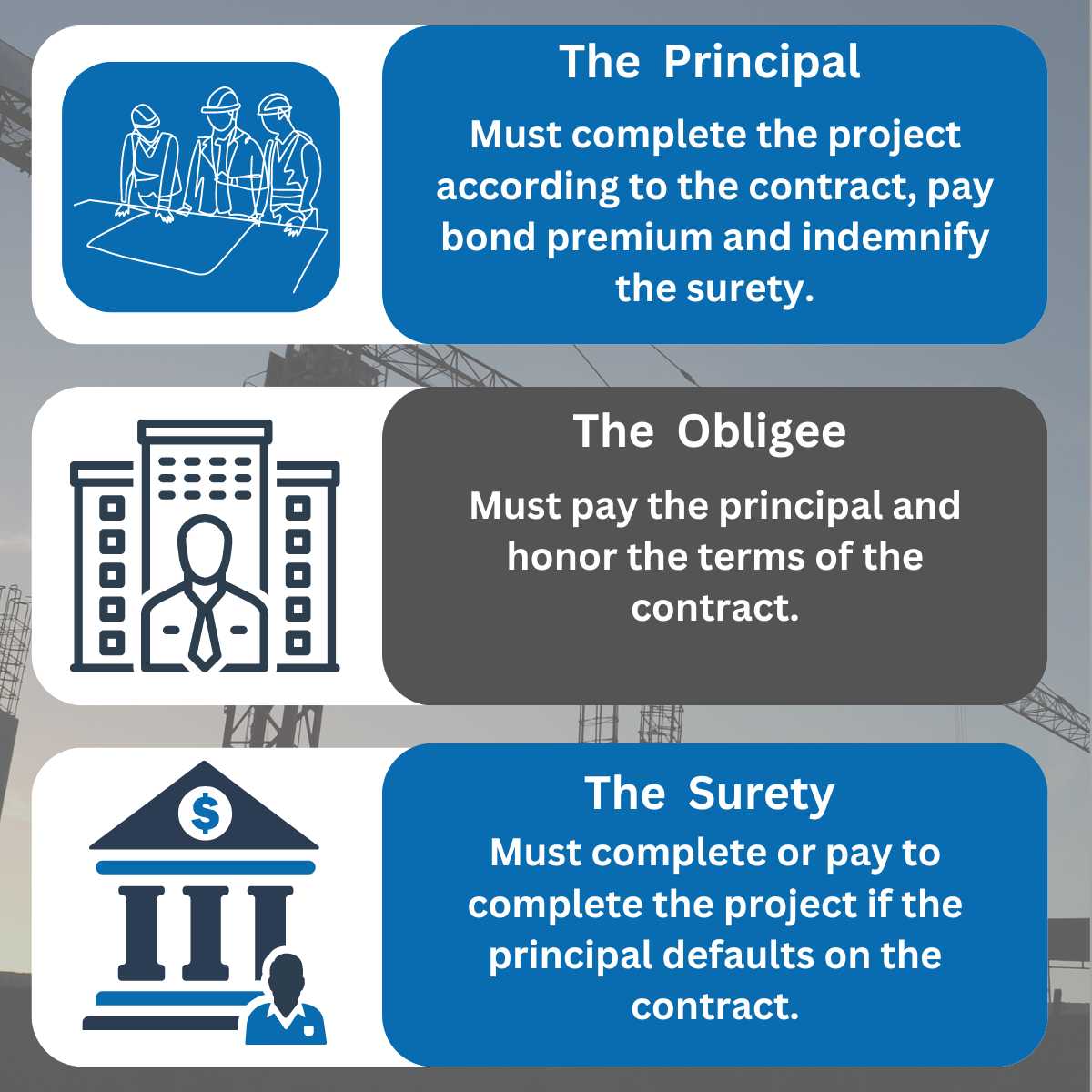
Payment bonds and performance bonds live side by side, often from the same surety. Their promises are distinct. Payment bonds secure money obligations to subs and suppliers. Performance bonds secure completion of the work for the owner. Attempts to shoehorn completion costs, defect correction, or liquidated damages into a payment bond usually fail.
Where the two interact is in setoff. A contractor facing performance failures may assert backcharges against a sub’s unpaid balance for rework or schedule impacts. Sureties on payment bonds frequently accept contractually proper backcharges as reductions to “sums due.” If the backcharge is inflated, late, or not noticed per the subcontract, challenge it. I once cut a 20 percent blanket backcharge to under 3 percent by forcing the contractor to show crew sheets, ticketed hours, and material takeoffs that matched the alleged rework. Numbers beat adjectives.
Practical steps to avoid the exclusion trap
Below is a short, high‑yield checklist that helps most subs and suppliers avoid the common carve‑outs and procedural missteps.
- Get and read the bond early. Verify claimant definitions, notice addresses, and any fee or interest limitations. Track tiers and privity. Know exactly who you contract with and who sits above them. Document scope and changes contemporaneously. Field directives, RFIs, and signed dailies carry weight. Calendar statutory and bond deadlines from your last meaningful furnishing date. File early rather than argue about marginal dates. Break out invoices. Separate labor, materials, tax, freight, equipment, and extras to match what the bond is likely to honor.
A brief word on freight, storage, and logistics
Freight and storage are classic fence‑sitters. Many bonds cover reasonable delivery charges necessary to bring materials to the site. Excessive expedited freight triggered by your own late order will draw scrutiny. Offsite storage can be recoverable if the contract authorizes stored materials billing, the location is secure and insured, and you provide inventory records and photographs. Storing pallets in your yard without contractual approval usually does not qualify, even if the project was not ready to receive them.
If you anticipate storage, negotiate the term into your subcontract up front with clear criteria and a billing method. Then create a paper trail: warehouse receipts, insurance certificates listing the owner and contractor as additional insureds, and periodic inventories. When you later go to the surety, you want this to look like planned scope, not an afterthought.
Third‑party and tort claims are out
Payment bonds do not answer for injuries, property damage, or other torts. A supplier’s truck scraping a gatepost, or a water leak from your installed line that damages finished flooring, are insurance matters under CGL or auto policies, not recoverable bond claims. Likewise, fines and penalties assessed by agencies for wage violations or environmental issues are excluded. Do not mix these into a bond demand. It dilutes credibility.
International and cross‑border nuances
On cross‑border projects, bond language often borrows from local law. In Canada, for instance, standardized forms like CCDC and CCDC‑approved bond forms set claimant definitions and timelines that differ from U.S. statutes. In the U.K., project bank accounts and adjudication shift risk differently, and bonds may function as on‑demand instruments or conditional suretyships. The exclusion themes remain similar, but the exact edges move. If your project involves multiple swiftbonds jurisdictions, consult local counsel before assuming a U.S.‑style recovery for taxes, fringe, or notice timing.
When to escalate and when to settle
Surety claims live in documents and deadlines. If you have aligned your claim to what the bond actually covers, escalation to a formal lawsuit under the Miller Act or state statute is straightforward and often effective. If your demand leans heavily on extras without change orders, consequential damages, or costs far from the site, litigation will likely compress your recovery to the core labor and material numbers. In that posture, an early settlement that pays the indisputable principal, plus a modest slice of interest, may beat a year of briefing that ends at the same place.
One rule of thumb I use: if more than a quarter of the dollars you seek are in categories that sit near the edge of coverage - delay, overhead, standby equipment, unapproved extras - build a parallel negotiation track with the contractor or owner. Reserve the bond for the clean, document‑ready portions. This keeps the surety engaged and reduces the temptation to deny wholesale.
Bringing it all together
A payment bond is a precise tool. It exists to ensure that those who contribute labor and materials to a project are paid for that contribution. Its edges are sharp: tiers stop, damages narrow, deadlines bite, and conditions matter. The best protection is to structure your paperwork from day one assuming you might need the bond. Get the form, map your tier, define your scope in writing, keep daily logs, and bill in a way that aligns with what the bond respects.
The moment payments wobble, tighten your recordkeeping. Serve timely notices to preserve rights without burning bridges. Scrub your claim for excluded items and lead with the strongest, most clearly covered costs. You can still pursue gray‑area amounts through your subcontract or a change‑order process. Separating the clean from the contested reduces friction with the surety and speeds real money to your account.
Most of all, treat the payment bond as a backstop, not a business plan. When you understand what it excludes, you can structure your contracts, your project controls, and your invoices to keep more of your revenue inside the line the bond will protect.